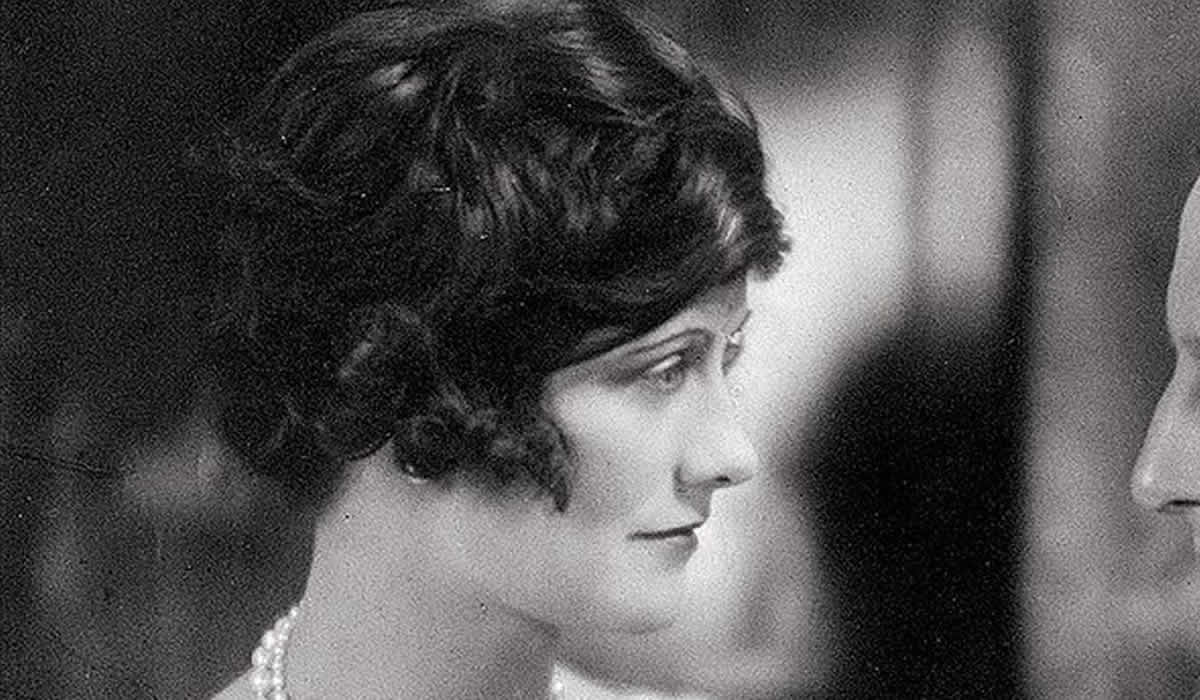
Coco Chanel turned herself into one of the most recognisable names in fashion history. She liberated women from corsets, made simplicity fashionable and built an empire around a bottle of perfume. But behind the elegant suits, expensive pearls and carefully cultivated rags-to-riches story was a far less glamorous woman.
During the Nazi occupation of France, Chanel enjoyed the company of German intelligence officers, became involved in espionage operations and attempted to exploit anti-Jewish Nazi laws to take control of a perfume business owned by Jewish partners. The woman who taught the world that luxury never goes out of style apparently had rather flexible principles when there was money to be made.
Is a prick because…
- She became involved with Nazi intelligence: During the German occupation of Paris, Chanel was living at the luxurious Ritz Hotel, which had become a favourite residence for senior German officials. Her lover was Baron Hans Günther von Dincklage, a German intelligence operative with connections to the Abwehr. Declassified French records subsequently identified Chanel as agent F-7124, with the codename Westminster. This wasn’t simply a case of having an unfortunate boyfriend. Her relationship brought her into the orbit of Nazi intelligence and helped facilitate her own activities.
- She actually worked for the Nazis: Chanel’s intelligence connections went beyond socialising with German officers. She travelled to Madrid in 1941 on a mission involving political contacts and British diplomats. Later, she became involved in Operation Modellhut, an attempt by German intelligence to use her connections to Winston Churchill to explore possible negotiations with Britain. The operation collapsed after her associate Vera Lombardi denounced the group as German agents. Chanel’s exact contribution to German intelligence remains debated, but her documented involvement is considerably more serious than a questionable wartime romance.
- She tried to use Nazi anti-Jewish laws to steal her perfume business: This is arguably the ugliest part of her wartime record. Chanel had partnered with Jewish businessmen Pierre and Paul Wertheimer to develop her perfume empire. The Wertheimers owned the majority stake in Parfums Chanel, while Chanel received a smaller share. When the Nazis introduced laws forcing Jewish people out of businesses, Chanel attempted to use the so-called Aryanisation process to seize control of the company. The brothers had anticipated the danger and transferred their interests to a non-Jewish businessman before fleeing France. Chanel’s attempt failed, but the intention was unmistakable: she was prepared to exploit the persecution of Jewish people to enrich herself.
- Her antisemitism was more than a wartime convenience: Chanel moved in circles populated by extreme-right figures and had a long history of associations with people who shared antisemitic views. Biographers have described her own antisemitism as deeply ingrained, although the extent of her personal ideological commitment remains disputed. Her attempt to exploit Nazi racial laws against her Jewish business partners makes it particularly difficult to dismiss the issue as mere opportunism.
- She enjoyed luxury while France suffered: While ordinary French people endured occupation, shortages and the brutality of Nazi rule, Chanel continued living comfortably at the Ritz, protected by her connections to German officials. She had shut down her fashion business in 1939, laying off thousands of workers, while maintaining her privileged lifestyle. Her wartime circumstances were a world away from the people suffering under the occupation.
- She escaped serious consequences: After the liberation of Paris in 1944, Chanel was questioned by French authorities over her wartime relationships and activities. She was released without prosecution and subsequently moved to Switzerland. Her powerful connections, including her friendship with Churchill, have often been cited as possible reasons she avoided a harsher reckoning, although the precise circumstances remain uncertain. Unlike many collaborators, she eventually returned to France and rebuilt her career. By 1954, she was back in business, and the fashion world was more than happy to welcome her.
Is not a prick because…
- She genuinely changed women’s fashion: Chanel’s influence was enormous. She helped popularise practical clothing, trousers for women, jersey fabrics, the little black dress and designs that moved away from restrictive corsetry. Her work transformed how women dressed and remains influential decades after her death.
- Her wartime record has some complications: Documents displayed in a 2023 Victoria and Albert Museum exhibition also identified Chanel as an occasional agent for a French Resistance network between 1943 and 1944. The precise nature of that involvement remains unclear. It complicates the picture, but it does not erase the evidence of her dealings with Nazi intelligence or her attempt to exploit anti-Jewish laws.
Coco Chanel’s fashion legacy is undeniable. But so is the stain on her wartime record. She built an empire selling elegance, independence and sophistication, while associating with Nazi intelligence and attempting to profit from the persecution of Jewish business partners. Her name remains stitched into the fabric of luxury fashion. Unfortunately, so does a rather large Nazi-shaped stain.