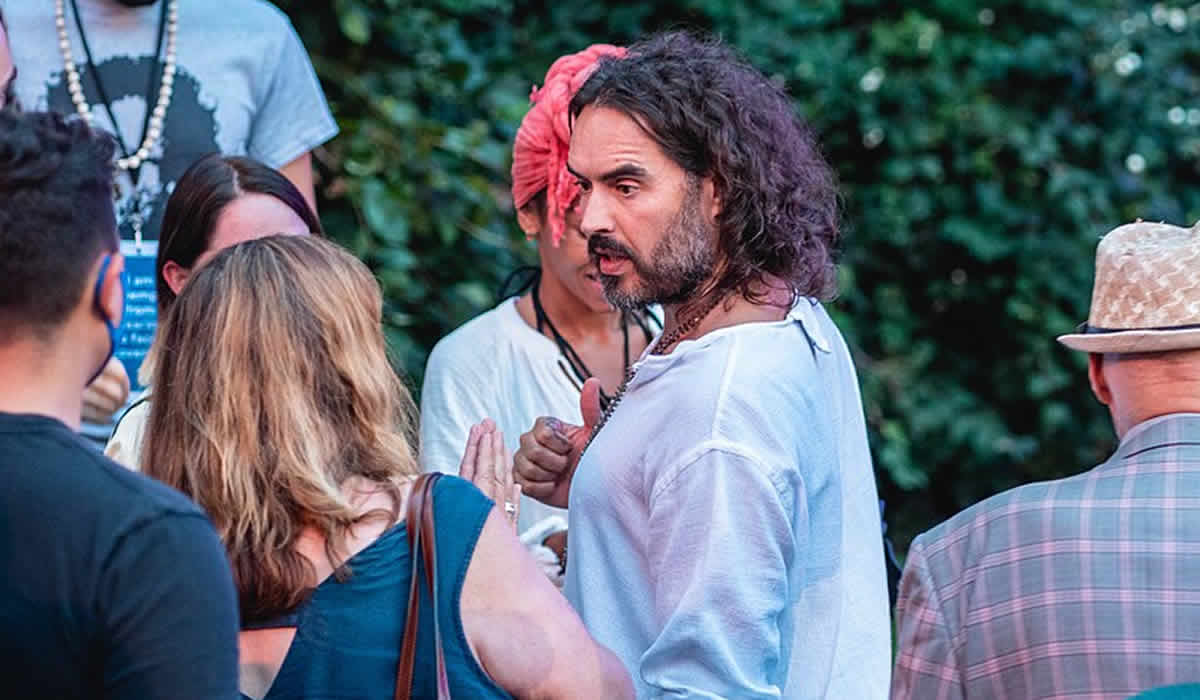
Russell Brand spent years presenting himself as a revolutionary thinker, spiritual guru, champion of free speech and misunderstood intellectual. In reality, behind the ridiculous vocabulary, theatrical hand gestures and permanent expression of someone who has just discovered his own reflection, was a man whose behaviour towards women would eventually land him in prison. He built a career on being outrageous, sexually boastful and seemingly incapable of having a normal conversation without turning it into a performance. Then came the allegations, the investigations and, ultimately, criminal convictions for rape and sexual assault. The self-proclaimed voice of truth discovered that the truth can be rather inconvenient when it catches up with you.
Is a prick because…
- Convicted of rape and sexual assault: On 5 November 2026, Brand was found guilty at Southwark Crown Court of one count of rape and three counts of sexual assault involving four women. The offences took place between 2004 and 2009. He was sentenced to 10 years and six months in prison on 9 November.
- The other criminal charges: Brand was acquitted of two further counts of rape and one count of attempted indecent assault. He denied all the charges, telling the court that he had been promiscuous but had never engaged in non-consensual sex.
- The investigation that exposed him: In September 2023, Channel 4’s Dispatches, The Sunday Times and The Times published an investigation featuring allegations from several women. The reports included claims of rape, sexual assault, emotional abuse and controlling behaviour. The investigation prompted a police inquiry and eventually criminal charges.
- His father’s prostitute stories: Brand has publicly discussed how his father took him to Hong Kong and Thailand as a teenager and reportedly arranged prostitutes for them both. Resurfaced footage from his television series Re shows the pair discussing their sexual encounters, including a trip when Brand was 17. Rather than keeping these experiences private, Brand turned them into stories for public entertainment, boasting about sexual encounters and treating the whole episode as amusing material.
- The Andrew Sachs scandal: In 2008, Brand and Jonathan Ross left a series of crude messages on actor Andrew Sachs’s answering machine, boasting that Brand had slept with Sachs’s granddaughter, Georgina Baillie. The messages were broadcast on BBC Radio 2, prompting more than 27,000 complaints. Brand resigned from his show, Ross was suspended and the BBC was forced to apologise.
- The sex addiction and endless conquests: Brand has openly discussed his past sex addiction, including encounters with prostitutes and an obsession with sexual gratification. His autobiography was packed with stories about his conquests and compulsive behaviour. Women frequently appeared in his public storytelling as trophies in a never-ending competition to demonstrate his sexual prowess.
- The permanent performance: Brand seems incapable of having a normal conversation without turning it into a theatrical monologue. Every sentence comes wrapped in exaggerated vocabulary, dramatic pauses, frantic hand gestures and an apparent need to demonstrate that he is the most intellectually gifted person in the room. His mannerisms are not evidence of OCD or any other diagnosed condition. They are part of the exaggerated public persona he has cultivated for years.
- The Covid conspiracy salesman: During the pandemic, Brand increasingly used his online platforms to question public health guidance, vaccines and government responses. His videos gave a platform to misleading claims and conspiracy theories, attracting an audience increasingly convinced that mainstream institutions were hiding the truth.
- The political chameleon: Brand once positioned himself as a left-wing anti-establishment activist, famously urging people not to vote in the 2015 UK general election. He later reinvented himself as an online commentator increasingly aligned with right-wing personalities and conservative causes. His political transformation coincided with his growing attacks on mainstream media and established institutions.
- The free-speech hypocrisy: Brand has repeatedly presented himself as a champion of open discussion and the right to challenge authority. Yet his response to criticism and allegations has often involved portraying the media and investigators as part of a coordinated establishment campaign against him.
- The Katy Perry marriage: Brand married singer Katy Perry in 2010, but the marriage lasted just 14 months. Perry later described the relationship as emotionally difficult and said Brand informed her by text message that he wanted a divorce. Brand has also discussed their private relationship publicly.
- The celebrity industry’s blind eye: Brand’s outrageous behaviour was treated as part of his entertainment appeal for years. Television companies, broadcasters and media organisations continued giving him platforms despite complaints and concerns about his conduct.
Is not a prick because…
- He was genuinely funny: At his best, Brand was an exceptionally charismatic comedian with an unusual ability to improvise, entertain audiences and command a stage. His early stand-up and television work demonstrated real comic talent.
- He has spoken openly about addiction: Brand has discussed his struggles with drugs and alcohol and promoted recovery programmes. His willingness to talk about addiction has helped some people engage with the subject.
- He has supported charitable causes: Brand has been involved in campaigns around addiction recovery, homelessness and social inequality. His work with the Trew Era Café in London aimed to provide support and employment opportunities for people recovering from addiction.
Russell Brand built a career on being the loudest, most outrageous and supposedly most enlightened man in the room. He lectured audiences about morality, freedom and human consciousness while turning his private life into a never-ending performance about sex and self-importance. His comedy career may have made him famous, but his criminal convictions have defined his legacy. The endless vocabulary, spiritual reinvention and theatrical nonsense cannot disguise the seriousness of what a jury found he did.