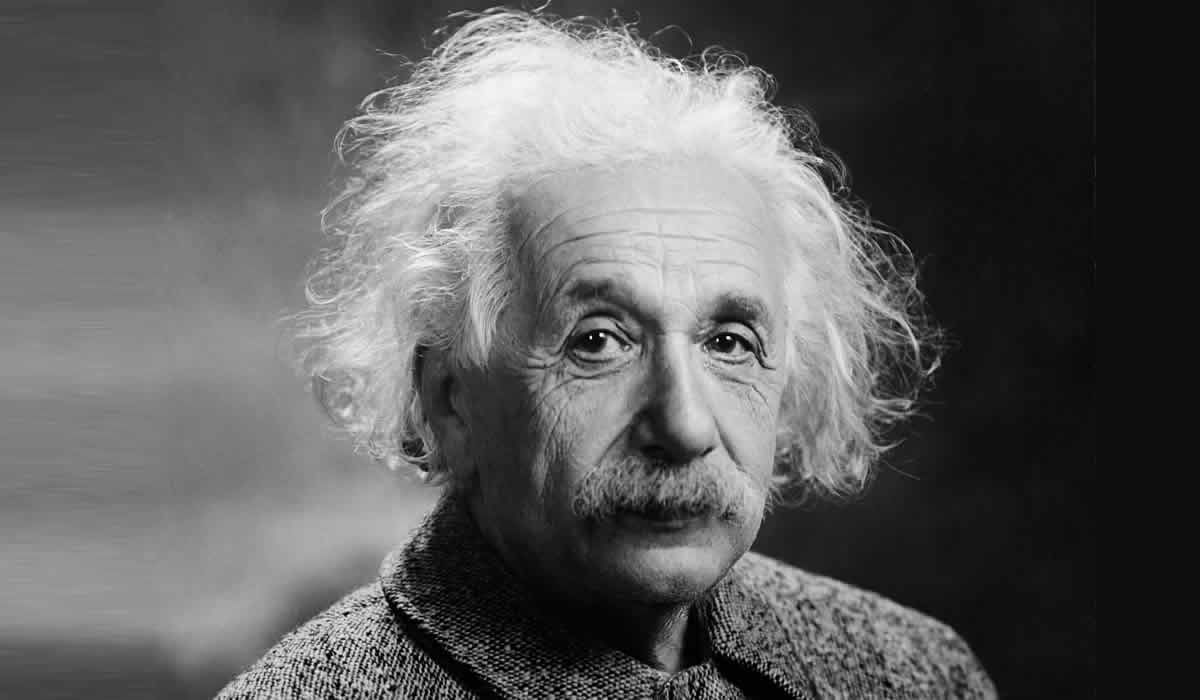
Albert Einstein is remembered as one of the greatest minds in human history. The wild hair, the tongue-out photograph, the theory of relativity and the image of a harmless, eccentric genius have made him practically untouchable in popular culture. But being able to explain the universe doesn’t automatically make you a decent human being. Einstein’s private life included infidelity, an appalling attitude towards his first wife and children, and some genuinely ugly views about other races.
The man who became an international symbol of humanitarianism was considerably less enlightened behind closed doors. His own letters and diaries reveal a selfish husband, an often-absent father and a man whose private opinions could be astonishingly prejudiced. The brain was extraordinary. The behaviour was rather less impressive.
Is a prick because…
- He treated his first wife like an unpaid servant: When his marriage to Mileva Marić was collapsing in 1914, Einstein sent her a list of conditions under which he would agree to continue living together. She was expected to keep his clothes and laundry in order, serve him three meals a day in his room, maintain his bedroom and study, and leave whenever he wanted. She was also expected to abandon any expectation of affection, intimacy or even ordinary conversation whenever he didn’t feel like talking. This wasn’t a marriage. It was a job description for a live-in housekeeper, with absolutely no employment benefits.
- He cheated on his wife with his own cousin: Einstein began an affair with Elsa Löwenthal, his first cousin, while still married to Mileva. The relationship helped bring his first marriage to an end, and he eventually married Elsa in 1919. He subsequently had other affairs, including one with his secretary Betty Neumann. His extraordinary intellect clearly didn’t extend to understanding the concept of marital fidelity.
- He abandoned his first daughter: Einstein and Mileva had a daughter, Lieserl, in 1902, before they married. Her fate remains unknown. She may have been adopted or died as a young child, but no definitive record has been found. There is no documented evidence that Einstein ever visited her. Whatever the circumstances surrounding her disappearance, the story is a disturbing part of his family history, especially given how little is known about what happened to her.
- His private diaries exposed some deeply racist views: Einstein’s travel diaries from 1922 and 1923, published in English decades later, revealed appalling comments about people he encountered in Asia. He described Chinese people as filthy, obtuse and more like automatons than human beings. He even wrote that it would be a pity if Chinese people supplanted other races. He also made dehumanising remarks about people in Sri Lanka and expressed crude stereotypes about Japanese and Indian people. These weren’t simply awkward observations about unfamiliar cultures. They were sweeping racial generalisations from a man who would later become a prominent critic of racism.
- His views on women could be just as ugly: The travel diaries also exposed a misogynistic streak. Einstein made degrading observations about Chinese women and their appearance, questioning what supposedly made them attractive to men. His private comments reduced women to physical characteristics and reproductive stereotypes. For someone celebrated as an intellectual giant, the thinking was embarrassingly primitive.
- He wasn’t exactly father of the year: Einstein’s scientific career and personal freedom often took priority over his responsibilities as a father. After separating from Mileva, he saw relatively little of his sons, Hans Albert and Eduard. Eduard later developed schizophrenia and spent much of his life in institutions. Einstein maintained contact and provided financial support, but their relationship was strained, and his demanding career kept him largely absent from family life. His achievements may have changed the world, but they didn’t make him particularly reliable at home.
Is not a prick because…
- He eventually became a genuine opponent of racism: Einstein later spoke forcefully against racial discrimination in the United States. He supported civil-rights campaigns, became involved with the NAACP and publicly condemned segregation. In a 1946 speech at Lincoln University, he described racism as a disease of White people. His later activism was significant, even if it sits uncomfortably alongside the views recorded in his earlier diaries.
- He stood against nationalism and militarism: Einstein was an outspoken pacifist for much of his life, opposed militarism and criticised authoritarian governments. He fled Nazi Germany because of his Jewish background and the threat posed by Hitler’s regime. He also supported international cooperation and the peaceful use of science.
- His scientific contribution was extraordinary: There is no serious argument against Einstein’s place in scientific history. His theories transformed physics, his work on relativity changed our understanding of space and time, and his explanation of the photoelectric effect helped establish quantum physics. His achievements were genuinely revolutionary.
Einstein was undoubtedly a genius, but the popular image of the lovable, harmless professor leaves out some rather unpleasant chapters. He could challenge the accepted laws of physics while apparently struggling with the basic principles of treating his wife as an equal, keeping his marriage intact or recognising the humanity of people from different backgrounds. E=mc² might have changed the world, but it certainly didn’t stand for Equality, Marriage and Common Decency.