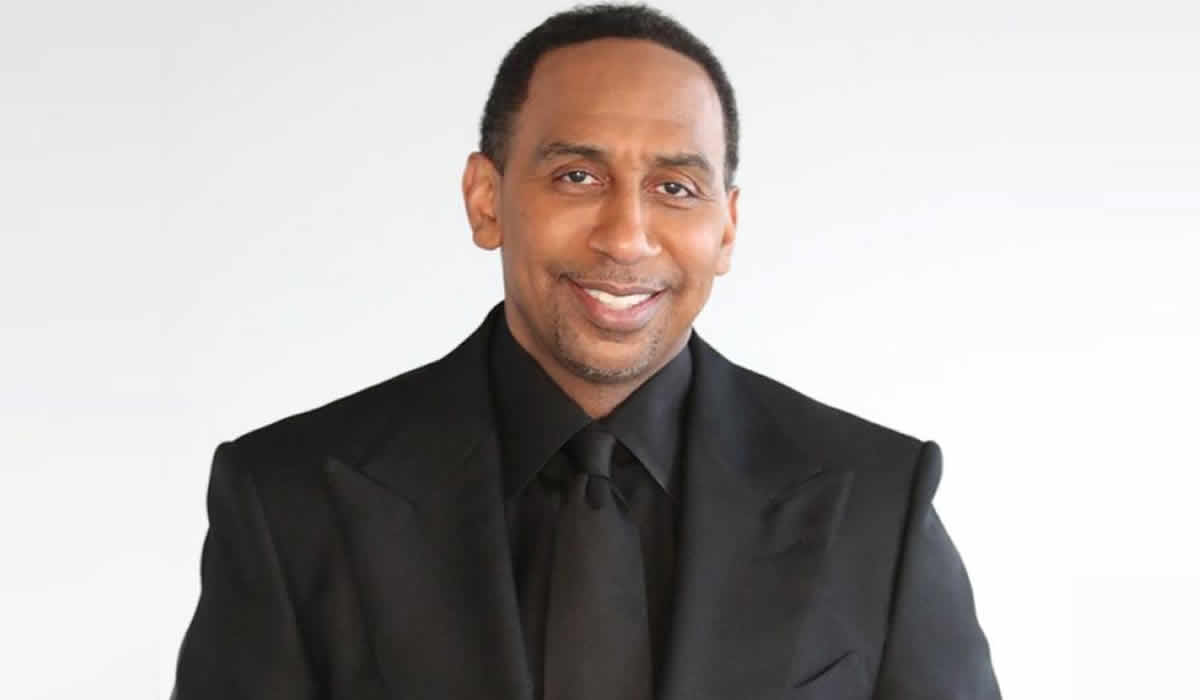
Stephen A. Smith has turned shouting into a career, outrage into a business model, and his own ego into the main event. The ESPN personality doesn’t simply give his opinion. He delivers it like he’s addressing a room full of idiots who should be grateful he’s bothered to explain the world to them. Every raised eyebrow, exaggerated pause, theatrical monologue and swaggering stadium entrance seems designed to remind everyone that Stephen A. considers himself the most important man in whatever room he’s standing in.
He’s made a fortune playing the all-knowing pundit, treating disagreements as personal challenges and delivering opinions with the sort of smug certainty usually reserved for people who have never considered the possibility that they might be wrong. His treatment of former co-host Max Kellerman, his controversial comments about race and domestic violence, and his habit of turning sensitive subjects into combustible television arguments have all attracted criticism. Confidence is one thing, but Smith often seems determined to make self-importance an Olympic sport.
And now, apparently, he wants to take his act to Washington. Smith has seriously entertained the possibility of running for US president in 2028, because why stop at lecturing basketball players and shouting over fellow commentators when you could potentially lecture an entire country? God help us all. America has already learned that celebrity, confidence and a willingness to dominate a television screen are not necessarily qualifications for political leadership. The prospect of Stephen A. delivering presidential speeches with the same theatrical outrage as one of his NBA rants is enough to make anyone wonder whether the political circus has finally run out of clowns.
But beneath the swagger, the catchphrases and the carefully cultivated persona, there is a successful broadcaster who has worked hard to get where he is. So let’s examine the case against him, and the arguments in his defence.
Is a prick because
- The ego is off the charts. His swaggering stadium entrances and self-important performances make it look like he’s expecting a red carpet just to walk through a door. The man doesn’t enter a room so much as announce his own arrival.
- He wanted Max Kellerman gone. Smith admitted he wanted Kellerman removed from First Take. Their partnership wasn’t working for him, but the episode reinforced the impression that sharing the spotlight is fine until someone else gets in the way of the main attraction.
- His Shohei Ohtani comments were embarrassing. In 2021, Smith questioned whether baseball’s Japanese superstar was suitable as the sport’s leading face because he needed an interpreter. He apologised, but the remarks exposed a spectacular lack of judgment from someone who regularly lectures everyone else.
- His Ray Rice commentary was disgraceful. Discussing domestic violence in 2014, Smith suggested women should avoid doing things that might provoke violence. He later apologised and was suspended by ESPN. Blaming or appearing to blame victims is indefensible, particularly from someone with such a massive platform.
- Race seems to become another ratings opportunity. Smith’s confrontational commentary on racial and cultural issues has repeatedly attracted criticism. In 2026, the National Association of Black Journalists gave him its “Thumbs Down” award, citing what it described as a recurring pattern of disparaging commentary about prominent Black women. Smith rejected the criticism. Either way, his willingness to turn sensitive issues into public confrontations deserves scrutiny.
- He treats disagreement like stupidity. Smith frequently delivers opinions with such absolute certainty that anyone who disagrees can seem like an idiot in need of a lecture. Confidence is one thing; acting as though your opinion is the final word on every subject is another.
- He’s flirting with a presidential run. Smith said in 2025 that he was seriously considering a possible 2028 presidential campaign after people encouraged him to run. He has every right to consider it, but being a successful broadcaster doesn’t automatically qualify someone to run a country. America has already seen what happens when celebrity and political ambition collide.
- His political commentary can be as theatrical as his sports takes. Smith has increasingly criticised Democrats and weighed in on national politics. Rather than demonstrating that he has the answers, his combative approach often makes politics look like another arena in which he can perform outrage and establish himself as the loudest voice in the room.
- He has a remarkable talent for making everything about himself. Whether the subject is a superstar athlete, a political controversy or a feud with another commentator, Smith’s personality can overwhelm the actual issue. Sometimes you want analysis, not another hour of Stephen A. explaining how important Stephen A. is.
- The outrage machine never switches off. Every defeat becomes a crisis, every disagreement a showdown, and every opinion an opportunity for a dramatic declaration. It’s profitable television, but it can make sports commentary feel like an endless argument engineered to keep people angry.
Is not a prick because
- He worked his way up. Smith began as a newspaper journalist and built his career through reporting, radio and television. His success didn’t appear from nowhere, and he deserves credit for the work behind it.
- He’s undeniably entertaining. Love him or hate him, Smith knows how to hold an audience. His delivery, catchphrases and willingness to argue have made him one of sports television’s most recognisable personalities.
- He challenges sporting superstars. He isn’t afraid to criticise famous athletes, question their decisions or call out poor performances. Being rich, famous or talented shouldn’t make someone immune to scrutiny.
- He can admit when he’s wrong. Smith has publicly apologised for several controversial remarks, including his comments about Ohtani and domestic violence. The mistakes remain serious, but acknowledging them is better than pretending they never happened.
- The swagger is part of the product. Sports television rewards strong personalities, memorable moments and arguments that keep audiences watching. Some of his apparent arrogance is undoubtedly a deliberate performance rather than a complete picture of the man.
- He’s ambitious and commercially successful. Smith has built a major personal brand and expanded into broadcasting, podcasting and political commentary. Ambition isn’t a character flaw, even if his public persona can make it difficult to separate confidence from self-importance.
- He’s not afraid to discuss difficult subjects. Smith regularly enters debates about race, culture and politics that other entertainers might avoid. The quality of his arguments is open to criticism, but controversial subjects shouldn’t be off limits simply because the discussion might become uncomfortable.
- He’s more than the shouting. Smith has spoken publicly about depression and personal grief. His television persona is only one part of his life, and it would be simplistic to assume that the loud, combative character audiences see on screen tells us everything about him.