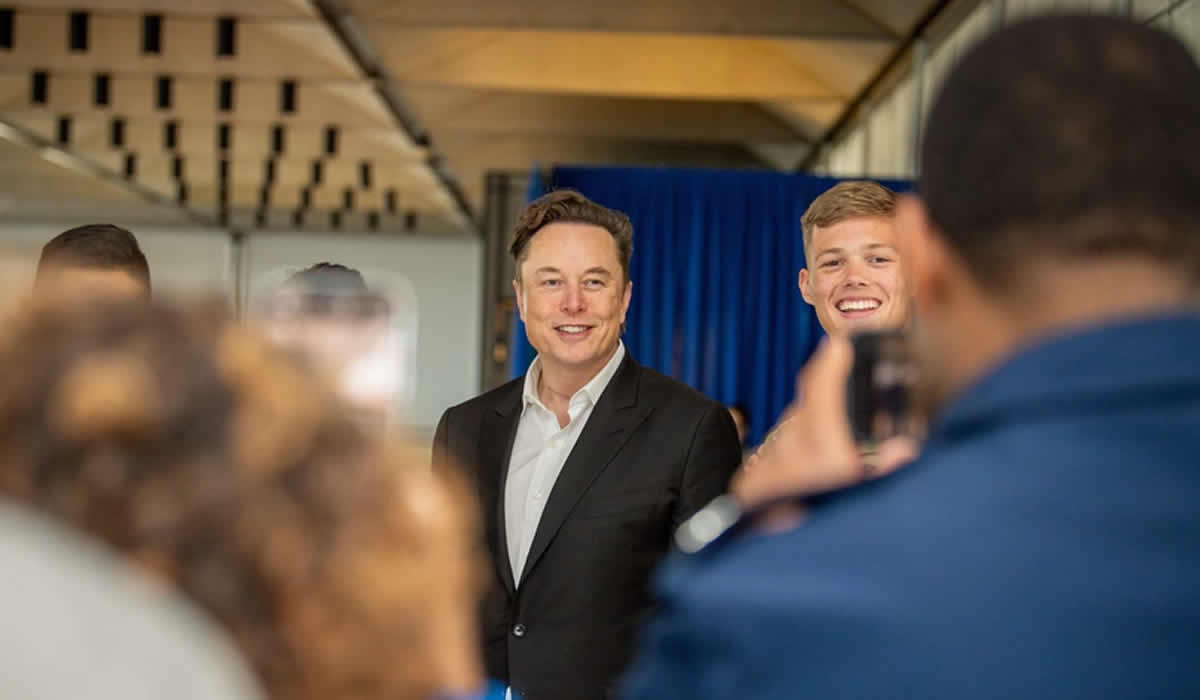
Elon Musk is what happens when you give a playground bully hundreds of billions of dollars and let him buy the playground. A man who wants to be worshipped as a genius, treated as a prophet and allowed to interfere in everything from foreign wars to democratic elections, while apparently expecting the rest of us to ignore the hypocrisy, the lies and the monumental ego. He has enough money to make a meaningful difference to some of the world’s biggest problems, yet seems far more interested in picking fights on the internet, cosying up to political extremists and congratulating himself on being the smartest bloke in the room.
And then there’s X, formerly Twitter, which Musk bought and proceeded to turn into a political battleground of outrage, conspiracy theories and algorithmic controversy. For all his talk of saving civilisation, he seems remarkably comfortable making public debate nastier while using his fortune to acquire political influence most people could never dream of. He might be a brilliant businessman, but that doesn’t make him a saint, a statesman or even a particularly decent human being.
Is a prick because…
- He could help the world’s poorest, but hoards his fortune: Musk’s wealth could fund enormous improvements in hunger relief, sanitation and healthcare. Instead, he spends much of his time boasting about Mars, fighting online and adding to an already extraordinary fortune.
- He turned Twitter into a political cesspit: Musk promised a free-speech utopia but oversaw a platform increasingly associated with political outrage, conspiracy theories and the amplification of extremist voices. He also personally intervenes in political discussions while owning the platform on which they take place.
- The right-wing algorithm: Musk’s ownership of X has raised serious questions about political favouritism and the platform’s recommendation systems. The European Commission has investigated X over its recommender systems and risks associated with Grok, including the spread of illegal and manipulated content.
- The free-speech hypocrisy: Musk made free expression central to his takeover, yet X has faced repeated accusations of inconsistent moderation, suspensions and political favouritism. The European Commission fined the platform €120 million in December 2025 over breaches involving its blue checkmarks, advertising transparency and researcher access to public data.
- He rewrites his own origin story: Musk’s self-made mythology downplays the advantages of his family background. His father, Errol Musk, has spoken about the family’s involvement in the emerald trade, although the precise extent of the family’s wealth and the familiar story of an emerald mine have been disputed. Musk’s achievements are real, but the image of a completely self-made outsider is considerably less convincing.
- His questionable immigration history: Musk was born in Pretoria, South Africa, in 1971. He moved to Canada at 17, using his Canadian citizenship through his mother, before arriving in the United States in 1992 to study at the University of Pennsylvania. He later moved to California to pursue a graduate programme at Stanford, but never enrolled in classes and instead began building his first business, Zip2.
- How he got his American passport: Musk became a naturalised US citizen in 2002. Before that, questions were raised about whether he had worked legally in the United States while establishing Zip2 in the 1990s. A 2024 Washington Post investigation cited former colleagues, company documents and immigration experts who said he had worked without the necessary authorisation after leaving Stanford. Musk denied this, saying he had a J-1 visa that transitioned to an H-1B work visa. The precise circumstances of his early immigration status remain disputed.
- The immigration hypocrisy: Musk has repeatedly attacked illegal immigration and demanded tougher enforcement, despite the controversy surrounding his own early years in America. His critics have pointed to the contrast between his treatment of undocumented migrants and the opportunities he received while building his business career.
- He takes credit for companies he didn’t found: Musk joined Tesla in 2004, several years after Martin Eberhard and Marc Tarpenning established the company. He later became its dominant figure and helped turn it into a major electric vehicle manufacturer, but the company’s original founders and thousands of engineers deserve recognition too.
- The Tesla tweet scandal: In 2018, Musk tweeted that he had secured funding to take Tesla private at $420 per share. The SEC accused him of misleading investors. He settled the charges without admitting or denying the allegations, stepped down as chairman and agreed to pay a $20 million penalty. Tesla also paid $20 million.
- His Ukraine meddling: Musk’s Starlink decisions during Russia’s invasion of Ukraine gave him extraordinary influence over communications on the battlefield. His comments about negotiations and territorial concessions, along with his criticism of Ukrainian leadership, prompted accusations that a private billionaire was exercising influence over a war without democratic accountability.
- The baby-making drama: Conservative influencer Ashley St. Clair publicly alleged that Musk fathered her child and subsequently took legal action seeking to establish paternity and custody arrangements. Musk initially said he did not know whether the child was his, despite publicly discussing financial support. The dispute raised questions about his responsibilities towards the children he fathers.
- The drug allegations: The Wall Street Journal reported allegations that Musk had used substances including cocaine, LSD, ecstasy, mushrooms and ketamine, citing people familiar with his alleged use. Musk has disputed aspects of the reporting and confirmed that he has a prescription for ketamine. He has also said he underwent random drug testing connected to SpaceX.
- The world’s most expensive internet troll: Musk uses his enormous platform to mock opponents, pick petty fights and humiliate people. For someone who claims to be advancing civilisation, he spends a staggering amount of time behaving like a teenager who has just discovered the reply button.
- He thinks money makes him an expert on everything: Running technology companies doesn’t automatically qualify Musk to lecture the world on war, democracy, economics, public health and civilisation. His confidence is limitless, even when his grasp of the subject deserves considerably more scrutiny.
- His political takeover: Musk went from technology billionaire to one of the most influential figures in American politics. He endorsed Donald Trump, used X to promote his political views and poured hundreds of millions of dollars into Republican campaigning. His America PAC spent more than $260 million during the 2024 election cycle, much of it helping Trump.
- The unelected government boss: After Trump’s return to the White House, Musk became the public face of the Department of Government Efficiency, or DOGE, and played a major role in efforts to cut federal spending and reduce the size of government. His influence over government operations, despite never being elected to public office, raised serious questions about accountability and conflicts of interest.
- The political fortune: Musk’s political involvement did not end with Trump’s election. By October 2026, Reuters reported that he had spent approximately $366 million on the 2026 midterm election cycle, making him one of the most powerful financial forces in American politics.
- The family fortune and business empire: Musk’s companies benefit from government contracts, subsidies and regulatory decisions, while he has become increasingly involved in political campaigning and government policy. The overlap between his business interests and political influence creates obvious questions about whose interests are being served.
Is not a prick because…
- He helped revolutionise electric cars: Tesla made electric vehicles desirable and forced traditional manufacturers to take them seriously. That’s a genuine achievement, regardless of his personality.
- SpaceX changed the space industry: Reusable rockets have transformed launch economics and made spaceflight more accessible. Musk deserves credit for backing a company that delivered genuine breakthroughs.
- Starlink does real good: Satellite internet has connected remote communities and supported communications during emergencies and conflicts. Its value is real, even when Musk’s decisions about access are controversial.
- He takes risks others won’t: Musk has invested heavily in ambitious projects that established businesses considered too risky. Some have succeeded spectacularly, even if his supporters sometimes exaggerate his personal contribution.
- He challenges complacent industries: His businesses have forced competitors to move faster and rethink established assumptions. Disruption can be valuable when it delivers better technology and more competition.
- He has achieved things most people only talk about: Electric vehicles, reusable rockets and satellite internet are substantial accomplishments. His ego may be astronomical, but his impact on technology is undeniable.
Musk may have helped revolutionise electric cars and space travel, but somewhere along the way he developed the delusion that being rich makes him qualified to run the world. He has turned a social media platform into his personal political megaphone, meddled in foreign conflicts, bought influence in American politics and surrounded himself with the sort of sycophants who mistake obscene wealth for wisdom. Behind the genius branding is a spiteful, attention-hungry billionaire with an ego bigger than his bank balance and an increasingly disturbing appetite for power.