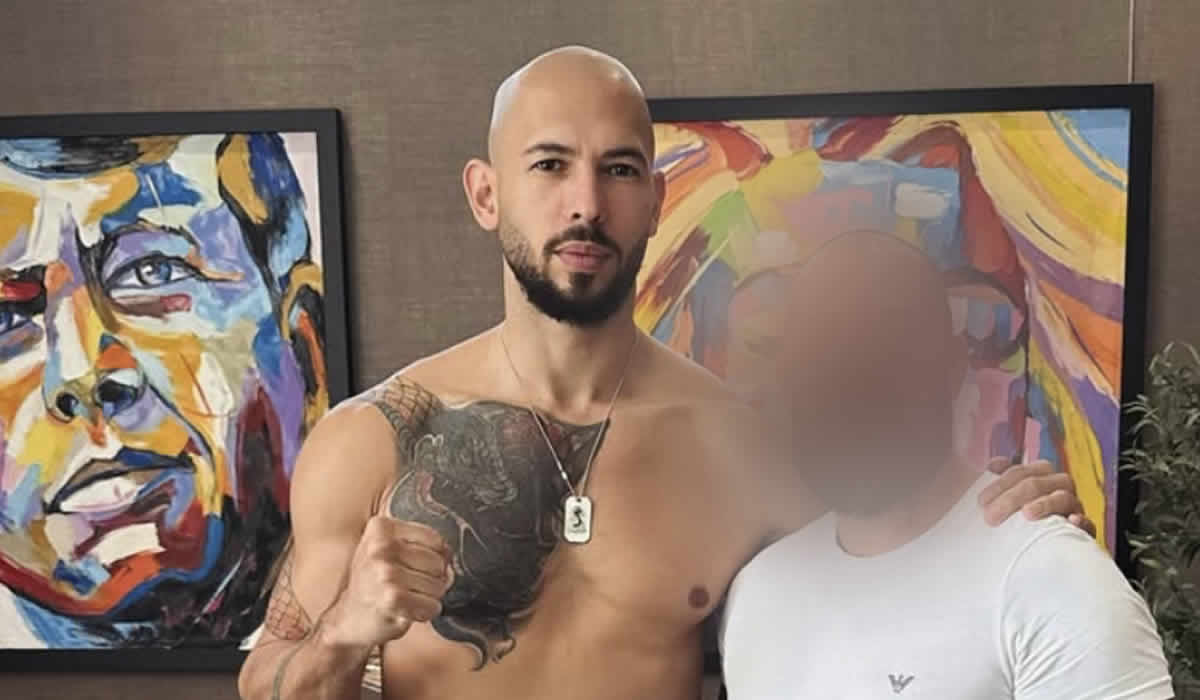
Andrew Tate has made a fortune selling young men a fantasy. In this fantasy, women are possessions, kindness is weakness, money is everything, and a man becomes an alpha by shouting loudly enough about his cars, muscles and supposed superiority over everyone else.
It is the worldview of a teenage bully who discovered cryptocurrency, bought a pair of sunglasses and decided he was the second coming of a Roman emperor.
Tate presents himself as a ruthless businessman, a master of human psychology and a man who understands the world better than the millions of supposedly inferior people he spends his time insulting. Yet behind the Bugattis, cigar smoke and endless lectures about masculinity lies a far less glamorous story: a controversial webcam business, a mountain of misogynistic statements, financial investigations and serious allegations of sexual violence and human trafficking.
He has described himself as a misogynist. He has spoken about women as property, promoted the idea that men should control their partners and built an online following by packaging domination as self improvement. His supporters call him a truth teller. His critics see a deeply cynical influencer who has discovered that there is an enormous market for insecure young men looking for somebody to blame for their problems.
And then there are the legal cases.
Tate has faced investigations and charges involving rape, human trafficking, sexual exploitation and other offences in Romania and the United Kingdom. He denies wrongdoing. In September 2026, Romanian prosecutors formally indicted him on further allegations involving trafficking minors, sexual activity with a minor, money laundering and witness tampering. In July, he was arrested in Miami after British prosecutors authorised additional charges involving rape, sexual exploitation, assault and other offences.
These are allegations, not convictions. But they are serious allegations, and they deserve considerably more scrutiny than another video of Tate explaining how the world works from the driver’s seat of an expensive car.
The supposed alpha male has spent years telling the world that he is untouchable. Now his future depends on legal proceedings on two continents.
For a man who has built his identity around being the ultimate winner, that is an extraordinarily uncomfortable plot twist.
Is a prick because…
1. He turned misogyny into a business model
Tate has not merely expressed old fashioned views about relationships. He has repeatedly promoted a worldview in which men should exercise control over women and women should accept their subordinate position.
He has made statements suggesting that women belong to men, that men should have authority over their partners and that women who are unfaithful deserve to be punished. His comments about women, rape and sexual responsibility have attracted widespread condemnation and contributed to his removal from major social media platforms.
Tate has also openly described himself as a misogynist. This is not some unfortunate misunderstanding caused by an awkward sentence taken out of context. His public persona has repeatedly relied on deliberately provocative statements about female inferiority and male dominance.
The genius of his business model, if it deserves that word, is that outrage generates attention, attention generates followers, and followers can be converted into paying customers.
He takes insecurity, wraps it in luxury branding and sells it back to young men as enlightenment.
There are legitimate conversations to be had about male loneliness, dating, confidence and the difficulties facing young men. Tate has managed to make those conversations considerably more toxic by suggesting that the solution is to become richer, more domineering and less respectful of women.
He is not selling emotional maturity. He is selling an expensive performance of superiority.
2. The webcam business raises deeply disturbing questions
Tate has spoken publicly about running a webcam business in which women communicated with paying customers online. In a podcast appearance, he described having dozens of women working for him and claimed that the business generated hundreds of thousands of dollars per month.
He has also explained how romantic relationships could be used to recruit women into the business.
The problem is not that every webcam business is exploitative or that every woman working in one is incapable of making her own decisions. The problem is the allegations surrounding Tate’s operation and the methods prosecutors say were used to recruit and control some of the women involved.
Romanian prosecutors have alleged that women were drawn into the operation through promises of relationships and marriage, then pressured or coerced into producing sexual content. Investigators have also alleged that some women were financially and physically controlled.
A Reuters investigation into the Romanian case documented allegations that the brothers exploited women through their webcam business. The allegations include claims that romantic promises were used to persuade women to travel to Romania.
Tate has described himself as a successful businessman. But if the prosecution allegations are proved, the business model looks considerably less like entrepreneurial genius and considerably more like the exploitation of vulnerable people.
There is nothing alpha about persuading someone that you love them if the ultimate objective is to profit from their sexual labour. That is not dominance in the admirable sense. It is manipulation dressed up as masculinity.
3. Taking the money while preaching financial freedom
Tate’s webcam operation is also central to allegations concerning the money earned by women working for the business.
Investigators have examined how revenue was collected and distributed. An International Consortium of Investigative Journalists report examined financial records and transcripts that appeared to show discussions about webcam income and arrangements for collecting money generated by women working in the operation.
The reporting raised questions about whether the brothers retained portions of the income and how that money was moved between accounts. Those findings formed part of a wider investigation into alleged exploitation and financial wrongdoing. They do not, by themselves, establish that every payment was stolen or that Tate has been convicted of financial offences.
Nevertheless, the contrast is difficult to ignore.
Here is a man who constantly tells his followers to become financially independent, escape the system and take control of their lives. Yet his own business history has been scrutinised over allegations that women were manipulated into generating income under circumstances involving coercion and control.
He sells young men the dream of financial freedom while prosecutors investigate whether some of the women involved in his business were denied the freedom to make their own choices.
What an inspirational entrepreneur.
4. The allegations about controlling and imprisoning women are not minor gossip
In Romania, the investigation into Tate and his brother Tristan has involved allegations of human trafficking, sexual exploitation and the formation of an organised criminal group.
Prosecutors have alleged that women were recruited through romantic deception and then subjected to control and exploitation. Some of the evidence reported publicly has included messages in which Tate allegedly imposed restrictions on a woman’s movements.
A Washington Post report on the Romanian investigation examined allegations that women were effectively confined to properties associated with the brothers and described messages that prosecutors cited as evidence of controlling behaviour.
The distinction matters: prosecutors have alleged that women were controlled and exploited. That does not mean every allegation has been proved in court, nor should every restriction described in an investigation automatically be labelled imprisonment as a legal finding.
But the underlying questions are serious. Were women free to leave? Were they able to control their own earnings? Were relationships used to secure compliance? Were they subjected to threats or coercion?
These are not trivial questions about a celebrity’s dating preferences. They go to the heart of whether people were exploited.
Tate has built a public identity around the idea that a man should control his household and that women should submit to his authority. When allegations emerge that women were subjected to coercive control, the public has every reason to scrutinise the gap between the philosophy he promotes and the conduct alleged by prosecutors.
He wants to be admired as a man who commands respect. Respect, however, is not something you can demand from people while treating their autonomy as an inconvenience.
5. Rape and sexual assault allegations that cannot be dismissed as internet drama
Tate has faced serious allegations of sexual violence in the United Kingdom, including accusations brought by four women in a civil case involving alleged rape, assault and coercive control.
The women include former employees of his webcam business and former partners. They have alleged incidents involving sexual assault, strangulation, threats and coercive behaviour. Tate denies the allegations and has maintained that the relationships and sexual encounters were consensual.
The allegations are documented in reporting on the civil proceedings.
These are not findings of guilt. The claims must be tested through the appropriate legal process, and Tate is entitled to defend himself.
But the seriousness of the allegations should not be obscured by his celebrity status or his ability to turn every controversy into another opportunity to promote himself.
Tate has spent years presenting himself as an authority on sex, relationships and masculinity. When multiple women bring allegations of sexual violence and coercive control, those claims deserve to be investigated carefully rather than waved away as a conspiracy against a famous man.
The public does not have to pretend that serious accusations are irrelevant simply because the person accused has millions of followers.
6. The legal cases keep multiplying
Tate’s legal troubles have extended across Romania, the United Kingdom and the United States.
In July 2026, British prosecutors authorised additional charges against Andrew Tate, including seven further counts of rape, three counts relating to arranging or facilitating trafficking for sexual exploitation, assault occasioning actual bodily harm, and offences involving indecent images of a child and extreme pornography.
He was arrested in Miami on 18 July as the UK pursued extradition proceedings. He denies wrongdoing.
Then, in September 2026, Romanian prosecutors formally indicted him on further allegations including trafficking minors, sexual activity with a minor, money laundering and witness tampering. Those proceedings are separate from the British case.
The Crown Prosecution Service announcement sets out the additional UK charges, while Reuters’ reporting on the Romanian indictment describes the separate allegations there.
Tate has repeatedly portrayed himself as the target of politically motivated persecution. He is entitled to challenge the evidence and defend himself against every charge.
But claiming that the establishment wants to silence you is a remarkably convenient narrative when you have built an entire brand around presenting yourself as the one man brave enough to expose the truth.
The existence of charges does not prove guilt. Equally, declaring that every investigation is a conspiracy does not make the evidence disappear.
At some point, the legal process has to do what social media cannot: establish which claims can actually be proved.
7. He sells insecurity to boys and calls it empowerment
Tate’s influence is particularly troubling because of the audience he attracts.
His message is packaged for young men who may feel isolated, unsuccessful or frustrated with dating. He offers a simple explanation for complicated problems: society has weakened men, women have become entitled, and the solution is to accumulate money, status and power.
It is a seductive pitch because it gives people someone to blame and a ready-made identity to adopt.
Instead of teaching young men how to develop emotional resilience, build healthy relationships, manage rejection or find meaning beyond material success, Tate encourages them to see life as a hierarchy in which somebody must dominate and somebody must submit.
His luxury cars and displays of wealth reinforce the idea that financial success is proof of personal superiority.
But a Bugatti cannot establish that somebody is a good partner. A private jet cannot demonstrate emotional intelligence. And having millions of followers does not make a person’s opinions about women any less shallow.
Young men deserve better than the suggestion that their worth depends on how much money they earn, how many women they can attract or how effectively they can intimidate others.
They deserve confidence without contempt, ambition without exploitation and masculinity without the need to make somebody else feel smaller.
Tate has made a profitable business out of suggesting otherwise.
8. The hypocrisy of the self-proclaimed truth teller
Tate frequently presents himself as a man who sees through society’s lies. He claims to understand power, manipulation and human nature better than the journalists, politicians and critics who challenge him.
Yet his public persona depends heavily on spectacle. Expensive cars, luxury properties, aggressive declarations and deliberately provocative statements all help maintain the image of a man who has escaped the ordinary rules of life.
He also promotes paid online communities and courses, turning his advice about wealth and success into products that followers can purchase.
There is nothing inherently wrong with selling educational material or building an online business. The issue is the extraordinary confidence with which Tate presents himself as an authority while his own business practices and conduct have been subjected to serious legal scrutiny.
He tells followers not to trust the mainstream narrative, yet expects them to trust his version of events. He urges them to question institutions, but his own claims should be questioned just as rigorously.
He insists that men must be strong enough to reject manipulation, while his business model relies on persuading an audience that they need his guidance to become successful.
The contradiction is obvious. Tate wants his followers to be independent thinkers, provided their independent thinking leads them to buy what he is selling.
That is not a revolution in masculinity. It is influencer marketing with a superiority complex.
Is not a prick because…
1. He is entitled to a fair trial
Tate has denied the allegations against him, and the charges in Romania and the United Kingdom have not all resulted in convictions. The legal process must establish what happened, who was responsible and which allegations can be proved.
That principle matters regardless of how obnoxious a public figure might be. A fair trial is not a favour granted to people we like. It is a safeguard that applies to everyone.
2. Not everything he says about men is wrong
Young men can face genuine problems involving loneliness, a lack of direction, poor mental health and uncertainty about their futures. Encouraging people to exercise, develop useful skills, work hard and become financially responsible can be positive.
Tate’s appeal partly comes from recognising frustrations that some mainstream conversations about gender have struggled to address. The problem is that constructive advice is repeatedly mixed with misogyny, materialism and an unhealthy obsession with dominance.
Men do not need to choose between passivity and Tate’s worldview. They can develop confidence without treating women as inferior.
3. His legal defence deserves to be heard
Tate is entitled to challenge the evidence, question the prosecution’s case and insist that allegations be tested properly. Public outrage cannot substitute for proof.
But that right cuts both ways. He can defend himself in court, and the women making allegations are entitled to have their claims investigated seriously.
The proper outcome should depend on the evidence, not on the size of Tate’s following or the intensity of his critics’ anger.
Andrew Tate has built a global brand around money, dominance and the claim that he understands the world better than everyone else. He has also become the subject of serious allegations involving sexual violence, coercion and exploitation, which he denies and which must be resolved through the courts.
His defenders can argue about free speech, male empowerment and political persecution all they want. None of those subjects makes the allegations disappear, and none gives him a special exemption from scrutiny.
If Tate genuinely believes that strength means accepting responsibility and facing the truth, the standard should apply to him as much as it does to the millions of young men he lectures.
Until the legal cases are resolved, the verdict on the criminal allegations belongs to the courts. The verdict on his public persona is a different matter. A man who has made a fortune telling others how to live should hardly be surprised when the world starts examining how he has lived himself.