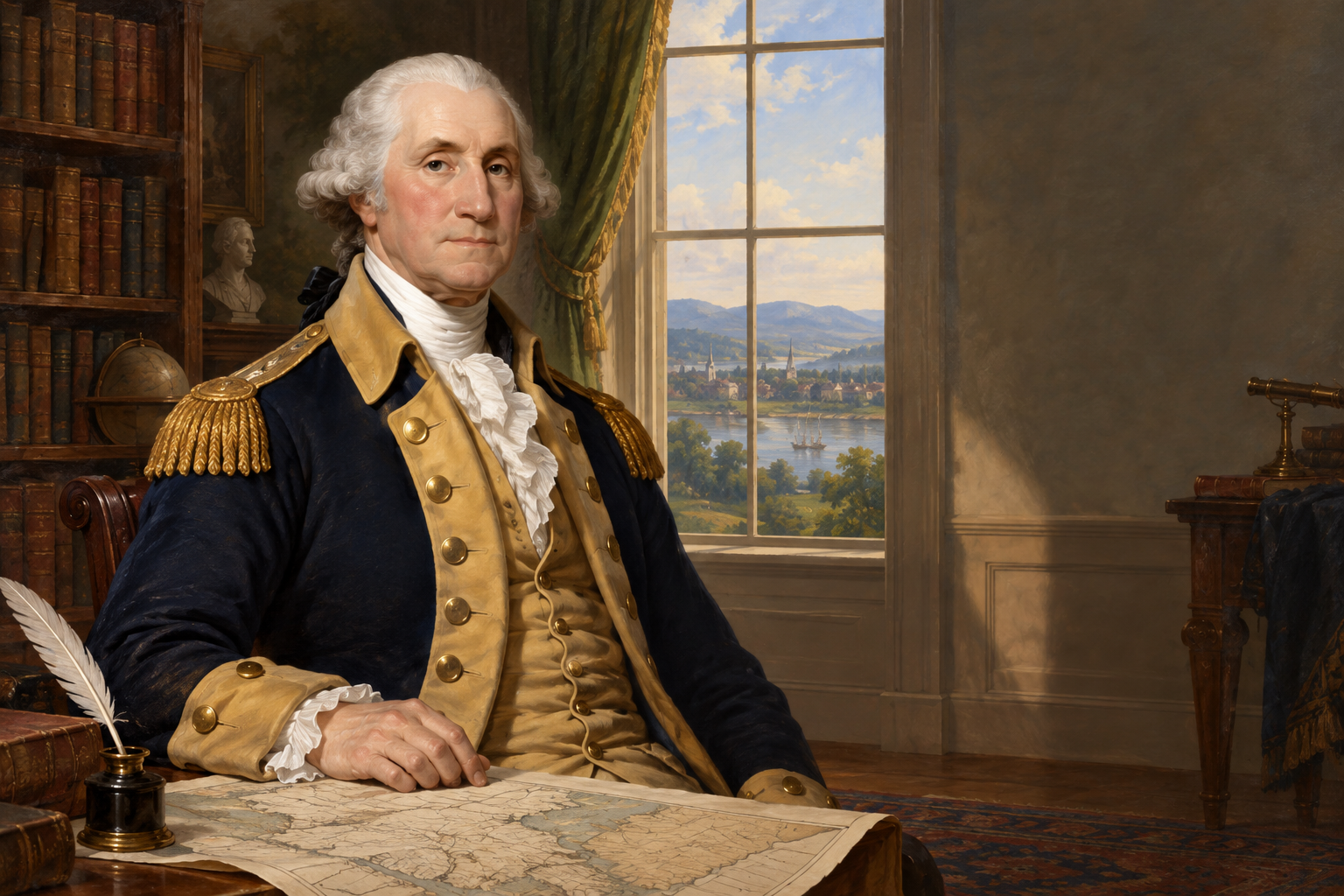
George Washington is celebrated as the father of the United States, the general who defeated the British and the first president who supposedly embodied freedom and democracy. There’s just one rather inconvenient detail in that patriotic fairy tale: he owned human beings, profited from their forced labour and spent much of his life enforcing a system that denied Black people the very liberty he helped secure for White Americans.
Washington helped build a nation founded on the language of freedom while enslaved people worked his estates without freedom of their own. He eventually arranged for the people he personally owned to be freed after his death, but only in his will. That hardly makes him the uncomplicated hero American history has tried to sell.
Is a prick because…
- He owned enslaved people for decades. Washington inherited enslaved people as a young man and acquired more throughout his life. By the time he died, he personally owned 123 enslaved people, according to Mount Vernon’s historical records. They were people, not property, regardless of what the law of the time said.
- He profited from slavery while preaching liberty. The labour of enslaved people supported his household and agricultural estates. Washington fought for American independence while maintaining a system in which people could be bought, sold, separated from their families and denied control over their own lives.
- He pursued an enslaved man who escaped. Ona Judge, an enslaved woman who served Martha Washington, escaped from Philadelphia in 1796. Washington made efforts to have her returned, including using intermediaries to arrange her capture without provoking public controversy. Judge resisted those efforts and remained free. The episode exposes the gulf between Washington’s public reputation and his determination to preserve his household’s control over enslaved people.
- He used the law to protect his ownership. While president, Washington arranged for enslaved people from his household to be rotated between Pennsylvania and other states to avoid a state law that would eventually have allowed them to claim freedom after a period of residence. The president of the new republic was finding ways around a law designed to limit slavery.
- His commitment to abolition came painfully late. Washington expressed concern about slavery and eventually provided in his will for the emancipation of the enslaved people he personally owned, effective after Martha’s death. But he did not free them during his lifetime, and the provision did not free the enslaved people legally controlled by other members of his family. His moral evolution came after decades of benefiting from the system.
- He helped establish a government that left slavery intact. The Constitution accommodated slavery through compromises that protected slaveholding interests. Washington presided over the Constitutional Convention and later served as president under that framework. He did not single-handedly create those compromises, but his leadership helped establish a republic in which slavery survived.
- His reputation has been polished into a national myth. Washington’s military leadership and role in founding the United States were significant. But the heroic portrait often sidelines the enslaved people whose labour sustained his wealth and the lengths he went to retain control over them. A national hero should be judged by the full record, not just the flattering chapters.
Is not a prick because…
- He led the Continental Army to victory. Washington’s military leadership was central to American independence, a major historical achievement that should not be erased.
- He voluntarily provided for the emancipation of the people he owned. His will ordered their freedom after Martha’s death, making him unusual among prominent Virginia slaveholders of his generation. It was a meaningful decision, although it came far too late for those who had lived and died in bondage.
George Washington helped create a country that declared liberty a founding principle while allowing slavery to flourish. His leadership deserves historical recognition, but it does not deserve immunity from criticism. The father of the nation was also a slave owner who spent years protecting his right to own people. Both facts belong in the history books.