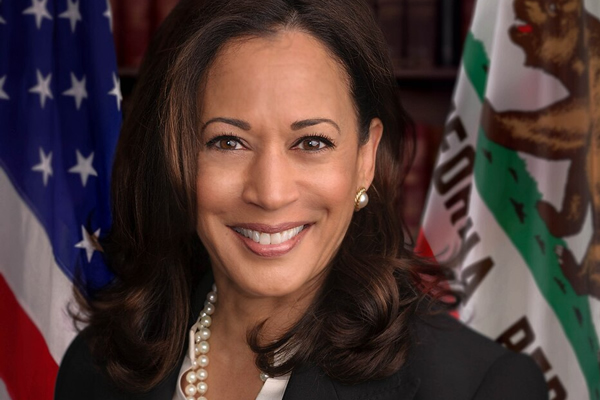
It’s hard to believe that a politician who spent years preparing for the highest office in America needed a presidential campaign handed to her on a plate. Kamala Harris went from California prosecutor to senator to vice president, only to find herself running for president after Joe Biden’s disastrous debate performance finally made his position untenable. Rather than let Democratic voters choose a replacement in another primary, the party rapidly united behind Harris, with Biden’s endorsement helping clear the way. Was this really the best candidate available, or was the Democratic establishment desperate to avoid a messy fight? Add her record on immigration, her prosecutorial past and a campaign that ultimately failed to beat Donald Trump, and there’s plenty to scrutinise.
A prick because…
1. Handed the crown: Democratic voters chose Biden in the primaries, not Harris. When he dropped out, party leaders rapidly rallied behind her rather than hold a fresh competitive primary. How Harris secured the nomination
2. The identity politics question: Biden had promised to select a woman as his running mate in 2020, and Harris’s historic identity became a major part of her political appeal. Critics questioned whether the Democrats were prioritising representation over finding the strongest possible candidate. The nomination process
3. The border problem: Harris was tasked with addressing the root causes of migration from Central America while the Biden administration struggled with the wider border crisis. Whatever the precise limits of her assignment, the issue became a political liability. Her immigration record
4. Tough on crime, until politics changed: As a prosecutor, Harris supported some hard-line policies that drew criticism from criminal justice reform advocates, including the prosecution of parents over school truancy. Her later progressive positioning invited questions about how much her principles had changed. Her prosecutorial record
5. Defending Biden’s record: Harris spent years as vice president defending an administration criticised over inflation, immigration and foreign policy. When she finally became the presidential candidate, distancing herself from that record proved difficult.
6. The campaign that fell flat: Harris had celebrity endorsements, substantial fundraising and a party desperate to stop Trump. Yet she lost the election, raising serious questions about her campaign strategy and the Democrats’ decision to rally behind her so quickly. The 2024 election result
Not a prick because…
1. Reproductive rights: Harris made abortion access a central campaign issue, opposing restrictions introduced after the Supreme Court overturned Roe v. Wade. Her position on abortion
2. Cannabis reform: Despite her earlier prosecutorial record, Harris later supported marijuana legalisation and federal reform. Her changing position
3. Taking on big banks: As California attorney general, Harris pursued major settlements over mortgage misconduct and secured an $18 billion agreement with banks in 2012. That is a concrete achievement rather than just another campaign promise. The record
4. Helping ordinary Americans: The Biden-Harris administration introduced a $35 monthly insulin cap for Medicare beneficiaries and invested in infrastructure. Those measures delivered tangible benefits, even if the administration’s broader economic record remained contested. The administration’s record
5. Breaking barriers: Harris became America’s first female vice president and the first Black and South Asian American to hold the office. Whatever her political shortcomings, that was a historic milestone.
6. Opposing the death penalty: As San Francisco district attorney, Harris refused to seek the death penalty against the man who murdered police officer Isaac Espinoza, despite significant political pressure. Her decision demonstrated a willingness to stand by a stated principle when it came at a political cost. The case